


TYPO3 – The Flexible Open-Source CMS Simply Explained
What is TYPO3? The open-source CMS at a glance: features, versions (v14 LTS), installation, login and a comparison with WordPress, explained by NITSAN GmbH.
Summary: TYPO3 is a free open-source CMS (GPL) that companies use to build, manage and extend their websites. Kasper Skårhøj started it in 1997, and it has been open source since 2001. This guide by NITSAN GmbH explains TYPO3's use cases, features, history and versions.
TYPO3 is a CMS platform for creating and managing websites, whether a personal blog or a large corporate site. A TYPO3 Agency relies on it because it covers every requirement.
What is TYPO3? TYPO3 is a free open-source CMS (GPL). Kasper Skårhøj started it in 1997, and it has been open source since 2001. The current LTS version is TYPO3 v14, released on 21 April 2026.
Sounds confusing? Let me explain it simply!
What is TYPO3?
Developed in 1997 by Kasper Skårhøj, TYPO3 is an open source content management system (CMS) that allows companies to create, manage and expand their online presence. It is based on PHP and uses TypoScript, a powerful configuration language that allows for extensive customization and flexibility. Output is done in the browser with HTML and JavaScript, without the need for specialized software. TYPO3 is used by thousands of websites worldwide, especially in Europe, from small and medium-sized businesses to large corporations.
Here are a few brief facts about TYPO3:
- Free & open source (GPL), no license fee
- Started in 1997, open source since 2001
- Current LTS version: TYPO3 v14, released on 21 April 2026
- The TYPO3 Association (founded 2004) has over 1,100 members (as of 2026)
- Many TYPO3 extensions in the official Extension Repository
- Dedicated TYPO3 training system and certification
Sources: The TYPO3 Story, TYPO3 v14 LTS Launch, TYPO3 Association General Assembly 2026, TYPO3 Extension Repository
What Is TYPO3 Used For?
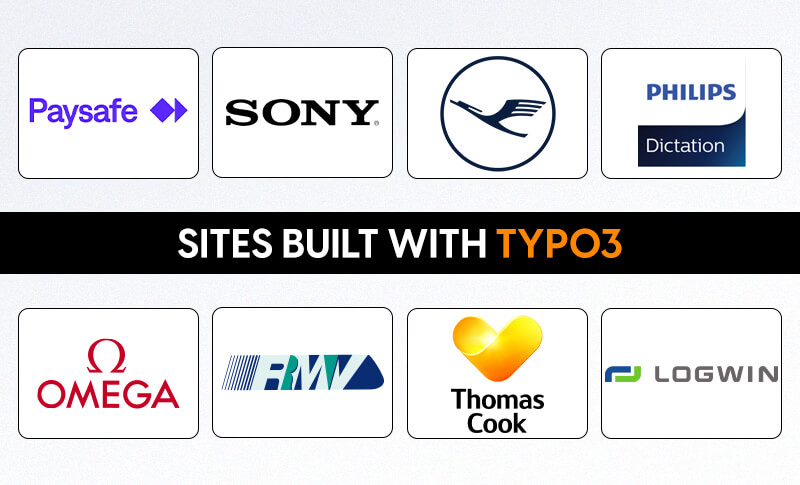
TYPO3 suits websites that combine many pages, several languages and several editorial teams. Typical uses:
- Corporate websites in several languages and countries
- Portals of public bodies, universities and organisations
- Online shops and product catalogues through extensions and interfaces
- News and information portals with editorial workflows
Small websites without these needs are often fine with a simpler system. How TYPO3 compares with WordPress is covered in our comparison. How a website is built with TYPO3 is explained in Create a website with TYPO3. For real-world examples, see the TYPO3 case studies.
What Can TYPO3 Do? Features at a Glance
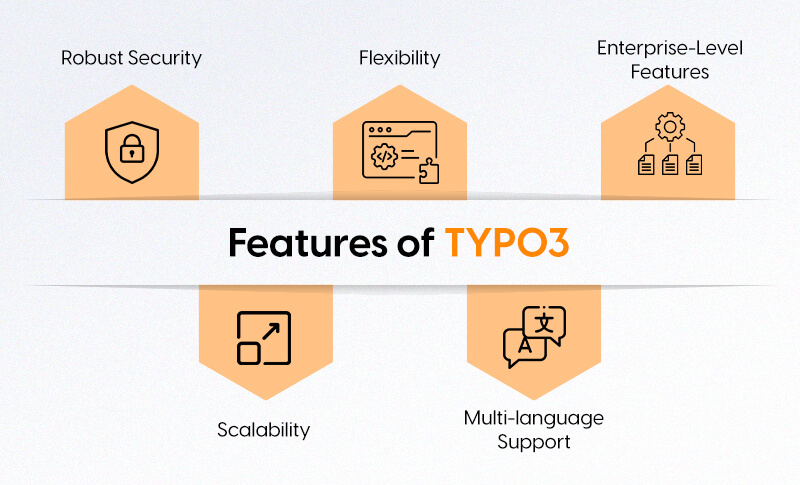
These features make TYPO3 a fit for larger websites:
- Roles and permissions: Editors only see and change what their role allows.
- Multilingual and multi-site: Language versions and several domains are managed in one installation.
- Editorial workflows: Content is prepared and approved in workspaces.
- Extensible: Extensions, templates and custom code add to the core.
- Security: The TYPO3 Security Team publishes security updates. More in our guide TYPO3 security.
- SEO basics: TYPO3 ships with metadata, sitemaps and redirects. More at TYPO3 SEO.
TYPO3 History and Versions
The Danish developer Kasper Skårhøj started TYPO3 in 1997. The first public beta appeared in August 2000, and TYPO3 became open source in 2001. The TYPO3 Association was founded in 2004. The name “Typo” stands for both typography and typing mistakes. With version 3 the “3” became part of the name, and since version 4 the product is simply called TYPO3.
Source: The TYPO3 Story
Year | Version | Note |
2011 | TYPO3 4.5 | First LTS version |
2014 | TYPO3 6.2 LTS | LTS |
2015 | TYPO3 7 LTS | LTS |
2017 | TYPO3 8 LTS | LTS |
2018 | TYPO3 9 LTS | LTS |
2020 | LTS | |
2021 | TYPO3 v11 LTS | LTS |
2023 | LTS | |
2024 | LTS | |
2026 | Current LTS version (21 April 2026) |
Install TYPO3
TYPO3 runs on a web server with PHP and a database (MariaDB or MySQL). The recommended way to install it is Composer. The main steps:
- Check the requirements: PHP, web server (Apache or Nginx), database, Composer.
- Create the project with Composer:
composer create-project typo3/cms-base-distribution - Create a database and connect it in the install tool.
- Create an administrator and log in to the backend at
your-domain.com/typo3. - Set up site configuration, languages and email settings under “Admin Tools”.
- Create the first page in the Page module and install extensions in the Extension Manager.
The full walkthrough is in Install TYPO3 and Install TYPO3 with Composer. For local development, see Install TYPO3 with DDEV. The official documentation is at docs.typo3.org. After installing, read TYPO3 security.
TYPO3 Login
The TYPO3 Login is the access to your TYPO3 Content Management System. It allows administrators, editors and developers to log in securely and manage website content, settings and features. Logging in to TYPO3 is quick and easy. Here's how it works:
- Go to the TYPO3 login page:
Open your browser and go to yourwebsite.com/typo3. Here you will find the TYPO3 login page. - Enter your details:
Enter your username and password. These are the details that your administrator has given you. Once entered, click on the "Login" button to continue. - Access the dashboard:
Once you have successfully logged in, you will see the TYPO3 dashboard. This is your control center where you can edit pages, upload images and manage content. - Secure your TYPO3 login:
Always use a strong password to protect your account. If your website supports it, enable two-factor authentication (2FA) for added protection.
The TYPO3 login process is simple and secure, making it easy for you to manage your website while protecting your data. If you have problems logging in, check your login details or contact your administrator for help.
TYPO3 Certification
Since 2014, the TYPO3 Association's education and certification team has been committed to expanding the ecosystem in the context of digitalization.
The TYPO3 certification exam helps you master important skills and ensures that your expertise aligns with current technologies and business goals. Certification not only validates your knowledge and skills, but also guarantees high-quality work that benefits the entire ecosystem and reduces project risks.
Here are the available certifications:

TYPO3 Templates and Extensions
Templates define the visual layout and design of a TYPO3 website for the topics they cover and ensure consistent and professional styling across all pages. Extensions add additional features to the website, such as forms, SEO tools or e-commerce capabilities, and allow customization beyond the basic TYPO3 features.
NITSAN is also involved in providing most extensions and templates for TYPO3 and offers a variety of TYPO3 templates and TYPO3 extension to enhance your website. Some of the top TYPO3 templates are T3 Bootstrap, T3 Karma and T3 Shiva, while popular extensions include Simple Cookies Bar, Zoho CRM Integration and Facebook Comment Plugin. These solutions help in creating visually appealing sites and add important features to fulfill your requirements.
TYPO3 for Developers
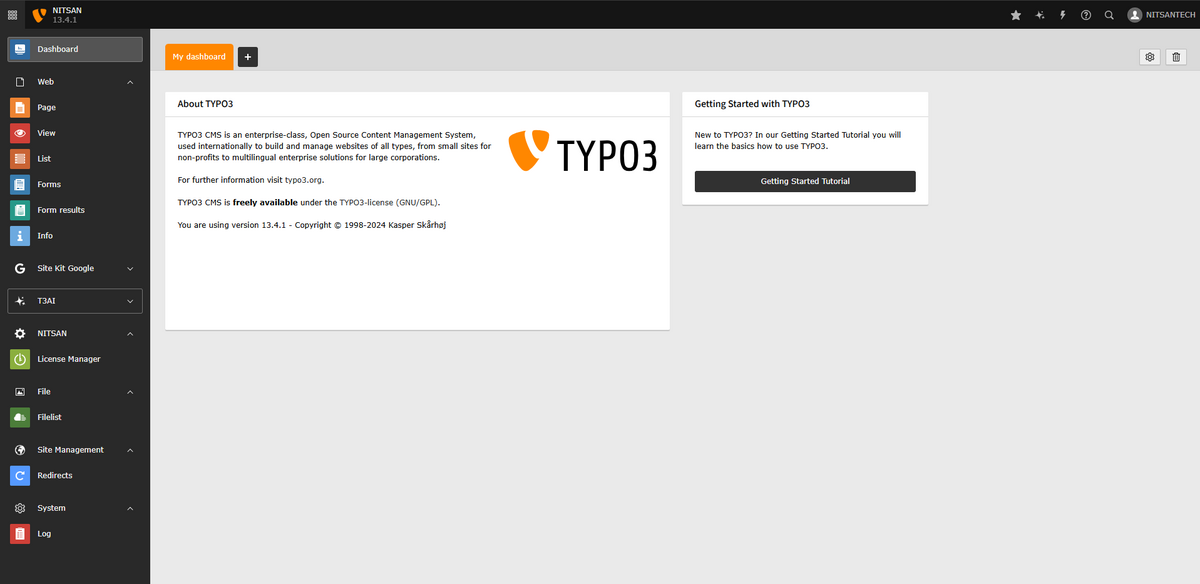
For developers, open source content management system TYPO3 is an all-in-one toolbox that provides everything they need to create a customized solution. It is built in PHP with object-oriented programming principles, making it the perfect choice for creating even the most complex applications with ease. TYPO3 also works well with other technologies such as MySQL, Apache and Nginx, making it flexible to integrate with third-party tools and systems.
TYPO3 is not just for developers, but is designed to help teams work together. TYPO3 developers can create custom content types, workflows and admin interfaces, while content editors enjoy a user-friendly interface for managing content. So everyone benefits!
TYPO3 also offers:
- An extension repository (TER) with thousands of ready-to-use modules.
- Seamless integration possibilities with external tools and services.
- A flexible framework to create unique features.
- Team-friendly collaboration tools for managing large projects.
TYPO3 gives developers the freedom to innovate while keeping things smooth for everyone involved.
The TYPO3 Community and the Ecosystem
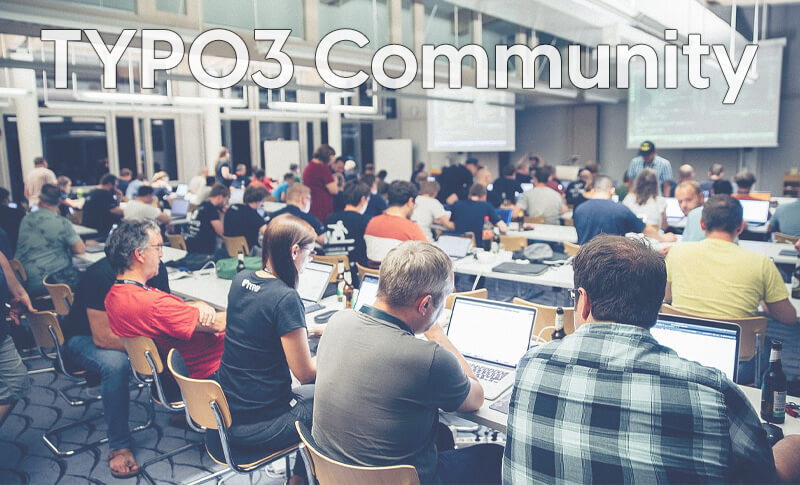
Image credits: typo3.org
TYPO3 is more than just a CMS; it's a vibrant, global community of developers, designers and users actively working together to make it better. This global community organizes events like the TYPO3 Developer Days 2025, and the TYPO3 Conference (T3CON) where people exchange ideas, learn from each other and work on exciting innovations. There is a strong presence of agencies, freelancers and consultants, especially those who specialize in development and support. With detailed documentation, exciting learning resources, community events and awards, it has everything you need.
Difference Between TYPO3.com & TYPO3.org
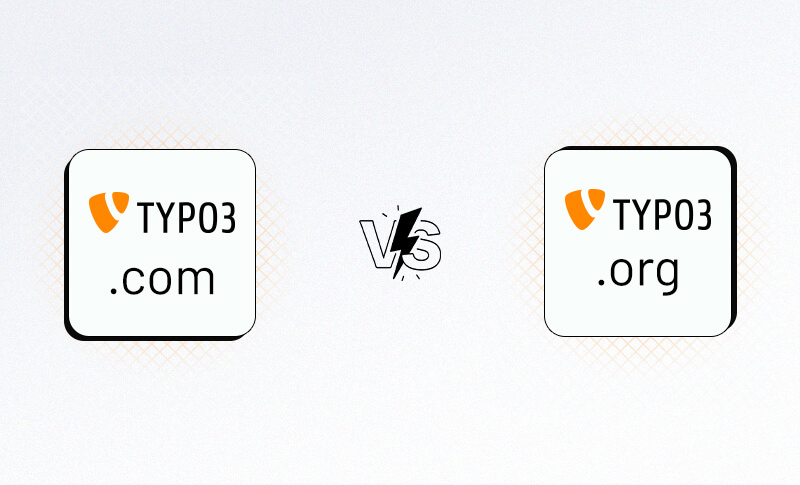
TYPO3.org is the official contact point for everything to do with TYPO3, the open source CMS. Here you will find resources such as documentation, tutorials, community events and access to the TYPO3 core and extensions.
TYPO3.com on the other hand, is a commercial website aimed at presenting TYPO3 as a product and offering services, support and solutions from certified TYPO3 agencies and experts.
In short, TYPO3.org is your first stop for learning and community, while TYPO3.com helps businesses find professional support and solutions.
TYPO3 vs WordPress: Simple comparison
User friendliness
- WordPress: Very beginner-friendly. You can set up a simple website quickly - without any programming knowledge. The user interface is intuitive and the Gutenberg editor lets you drag and drop content.
- TYPO3: Made for experts. Quite complicated for non-developers. The setup requires technical knowledge and the interface seems overwhelming at first.
Security
- TYPO3: More secure by default, especially for large organizations. It is less likely to be targeted by hackers and offers built-in features such as strict user permissions.
- WordPress: Relies on plugins (e.g. Wordfence) for security. Due to its popularity, it is a frequent target, but regular updates and good plugins ensure protection.
Scalability
- TYPO3: Ideal for large, complex websites (e.g. multinational companies or governments). It supports multiple languages, large teams and high traffic smoothly.
- WordPress: Best for small to medium-sized sites (blogs, online stores). It can scale with plugins and optimizations, but requires additional effort for enterprise-level projects.
Cost
Both are free (open source), but the costs differ:
- TYPO3: Requires developers for setup and maintenance, which can be expensive.
- WordPress: Cheaper in the initial phase. Costs increase if you buy premium themes/plugins or hire developers for customization.
SEO
- WordPress: Easier for SEO beginners. Plugins like Yoast give you tips in real time.
- TYPO3 SEO: Powerful built-in SEO tools, but requires technical know-how to use effectively.
Who should use what?
- Choose WordPress if you're looking for a quick and easy solution for a blog, portfolio or small business. Perfect for DIY users.
- Choose TYPO3 if you're a large organization looking for a secure, multilingual platform with complex workflows. Worth the investment for enterprise requirements.
Roadmap for TYPO3 v14
Release schedule
- TYPO3 version 14 LTS was released on 21 April 2026.
Overarching goals
- Improve the user experience (UX): Modernize the backend user interface to increase speed and usability.
- Lower the barrier to entry: Simplify installation and setup with best practice recommendations and improved documentation.
- Simplified migration and upgrades: Easier upgrades from TYPO3 v13 to v14 with clear documentation and automated processes.
- GenAI Toolbox: Integrating AI features by providing APIs that enable external AI services to assist editors with content creation and management.
- Marketing and customer acquisition: Developing the partner program to help agencies showcase their expertise and providing resources such as presentations and ROI calculators for customer acquisition.
Check your current TYPO3 version now with our free TYPO3 Version Checker.
The Future of TYPO3
The TYPO3 community develops the system in fixed release cycles. Current topics include headless operation (TYPO3 Headless), AI integration (TYPO3 AI) and accessibility (TYPO3 accessibility). What the next version brings is listed in the roadmap.
TYPO3 Services from NITSAN GmbH
Planning a TYPO3 website, an upgrade, or the operation of an existing installation? NITSAN GmbH is a TYPO3 agency and Gold Member of the TYPO3 Association. Our services:
- TYPO3 upgrade to the current LTS version
- TYPO3 development: extensions, templates, interfaces
- TYPO3 support & maintenance with SLA
- TYPO3 freelancers for your project team
- TYPO3 accessibility (WCAG, BITV, BFSG)
- TYPO3 AI
See the TYPO3 Agency page for an overview, or send us a direct inquiry.
Frequently Asked Questions (FAQ) About TYPO3
TYPO3 is a free, open-source content management system built on PHP. Companies, public bodies and universities use it to run multilingual websites with many editors. Kasper Skårhøj started it in 1997, and it has been open source since 2001.
Mostly companies, public bodies, universities and organisations in German-speaking countries and across Europe. TYPO3 fits websites with several languages, several domains and many editors.
Yes. TYPO3 is released under the GNU General Public License (GPL) and has no license fee. Costs come from setup, design, hosting, extensions and maintenance.
The current LTS version is TYPO3 v14, released on 21 April 2026. TYPO3 v13 LTS came out in October 2024. Our free version check shows which version your website runs.
Editors manage content without programming skills. Setup, templates and custom features need knowledge of PHP, TypoScript and HTML/CSS.
TYPO3 is built for large, multilingual websites with many editors and fine-grained permissions. WordPress is quicker to start and simpler for smaller sites. Details are in our TYPO3 vs WordPress comparison.
You need a web server with PHP, a database (MariaDB or MySQL) and Composer. Create the project with Composer and finish the setup in the install tool. The steps are in our installation guide.
Open your-domain.com/typo3 and log in with your username and password. Turn on two-factor authentication where possible. More in the TYPO3 login guide.
TYPO3 has its own Security Team that handles vulnerabilities and publishes updates. A website only stays secure if TYPO3 and its extensions are kept up to date. More in our guide TYPO3 security.
In the backend you find the version in the system information, or with Composer. Without a login, use our version check: enter the URL and read the version.
Costs depend on scope, design, interfaces and languages, so a flat number would mislead. After an analysis we prepare an offer for you. Send us your inquiry.
Look for certified developers, references, services from development to maintenance, and long-term support. NITSAN GmbH is a TYPO3 Agency and Gold Member of the TYPO3 Association.
Contact for Internet agency and TYPO3 projects
Sven Thelemann
Service Partner - Germany


Sven Thelemann
Client Service LeadSven Thelemann serves as the Client Service Lead at NITSAN, focusing on delivering TYPO3 solutions that meet client goals. With a strong understanding of technology and client expectations, he ensures smooth communication and project execution. Outside of work, Sven enjoys cycling and experimenting with homemade recipes.
Be the First to Comment