


TYPO3 Backend Login: URL, Sign-In Steps, Password Reset and Troubleshooting
Logging in to the TYPO3 backend is the first step to managing pages, content, media, users, and website settings. The default login address is usually https://www.example.com/typo3, but some websites use a custom backend URL for security or organisational reasons.
To access the backend, you need an active TYPO3 user account with the correct username and password. Depending on the website configuration, you may also need multi-factor authentication or single sign-on.
This guide explains how to find the correct TYPO3 login URL, sign in securely, reset a forgotten password, manage user settings, create backend users, and fix common login problems.
What Is the TYPO3 Backend?
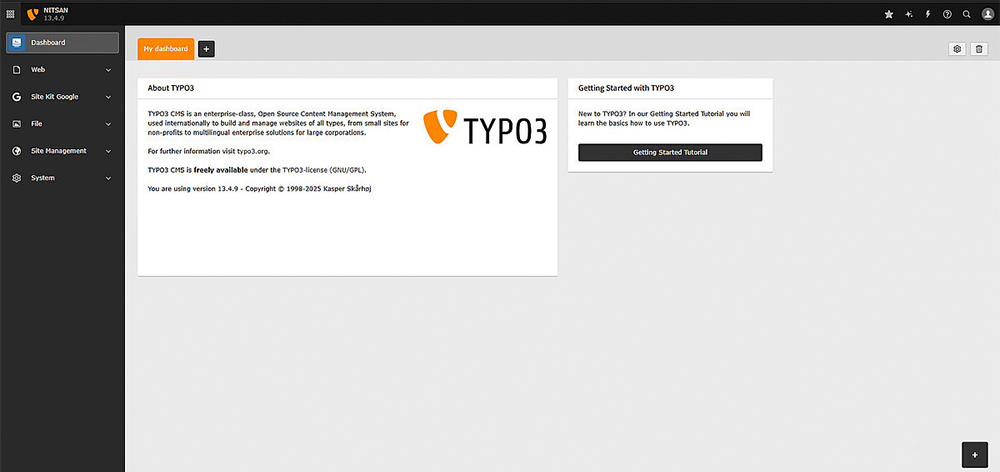
The TYPO3 Backend is the private administration area of a TYPO3 Website. It allows authorised users to manage website content, pages, files, users, and system settings without changing the website code directly.
The backend is mainly used by editors, content managers, administrators, developers, and website owners. Editors may update text, images, and pages, while administrators can manage users, permissions, extensions, and technical settings.
Typical backend tasks include:
- Creating and editing pages
- Adding text, images, videos, and other content
- Uploading and organising files
- Managing website languages
- Reviewing and publishing content
- Managing backend users and access rights
- Updating website settings and extensions
The available modules and functions depend on the permissions assigned to each backend account. For example, an editor may only have access to specific pages and content tools, while an administrator can access advanced system and user-management settings.
TYPO3 Backend Login vs Frontend Login
TYPO3 separates website administration from visitor access through two different login systems.
The TYPO3 backend login is used by editors, administrators, developers, and content managers. After logging in, authorised users can create pages, update content, upload files, manage users, configure extensions, and access website settings based on their assigned permissions.
The TYPO3 frontend login is designed for customers, members, employees, or other website visitors. It allows them to access protected pages, customer portals, member areas, downloads, or personalised website content.
Backend and frontend accounts are managed separately. A frontend username and password cannot normally be used to access the TYPO3 backend, and a backend account does not automatically provide access to restricted frontend areas.
What Is the Default TYPO3 Backend Login URL?
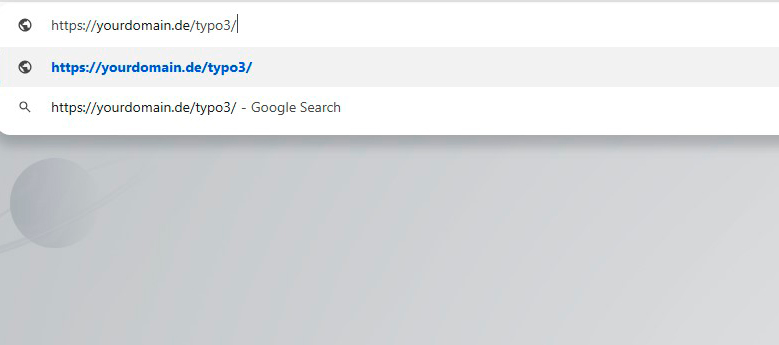
The TYPO3 backend URL depends on the website configuration and installed version.
Default TYPO3 Login Path
The standard login URL is usually:
https: //example.com/typo3
Replace example.com with your website domain.
Custom Backend URLs in TYPO3 v13 and v14
TYPO3 v13 and v14 can use a custom backend path or a separate backend domain or subdomain. Therefore, /typo3 may not work on every website.
TYPO3 v14 URL Note
TYPO3 v14 no longer uses the legacy /typo3/index.php entry point. Always use the configured backend URL.
How to Find Your Correct Backend URL
Check your project documentation, password manager, hosting details, or onboarding information. You can also ask your TYPO3 administrator or agency.
What Do You Need Before Logging In?
Before opening the TYPO3 backend, make sure you have the correct access details and any additional security requirements used by the website.
You may need:
- The correct TYPO3 backend URL
- An active backend user account
- Your assigned username and password
- JavaScript and cookies enabled in your browser
- Access to your registered email address
- An MFA device, authenticator app, or recovery method
- SSO credentials, VPN access, or an approved network connection where required
If any of these details are missing, contact your TYPO3 administrator or website agency before attempting to log in.
How to Log In to the TYPO3 Backend
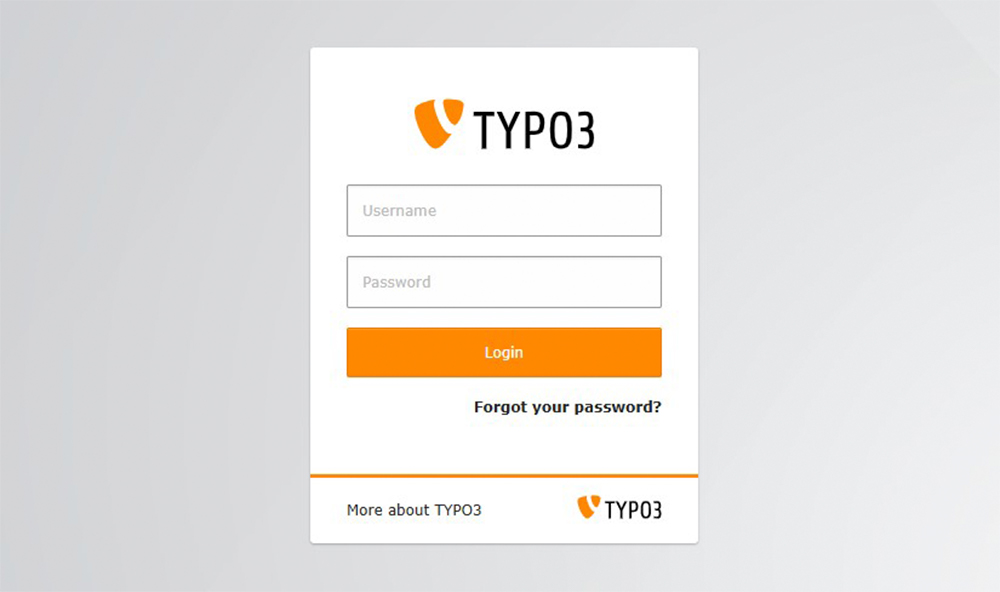
The exact login process may vary depending on the website’s security setup, but most TYPO3 installations use a username and password.
Standard Username and Password Login
- Open the correct TYPO3 backend URL.
- Enter your username.
- Enter your password.
- Complete any additional authentication step if requested.
- Click Login.
- Confirm that the TYPO3 backend dashboard loads correctly.
If the login fails, check your credentials and backend URL before trying again.
Logging In with Multi-Factor Authentication
Some TYPO3 websites require multi-factor authentication after the password stage. Enter the code generated by your authenticator app or use the configured authentication provider.
If you lose access to your MFA device, use an available recovery method or contact the administrator. Password reset alone may not restore MFA access.
Logging In Through SSO, OAuth, SAML or LDAP
Some organisations connect TYPO3 to a central company login system such as SSO, OAuth, SAML, or LDAP. In this case, the login screen and process may look different from the standard TYPO3 form.
Access is usually managed by the organisation’s IT team or identity provider. The normal TYPO3 password-reset link may also be unavailable because the password is managed outside TYPO3.
What You See After a Successful Login
After signing in, the TYPO3 backend displays the tools available to your account. These may include the top toolbar, module navigation, page tree, content workspace, and file management areas.
The exact modules and pages you can access depend on your assigned user permissions and backend groups.
TYPO3 Backend Account Registration
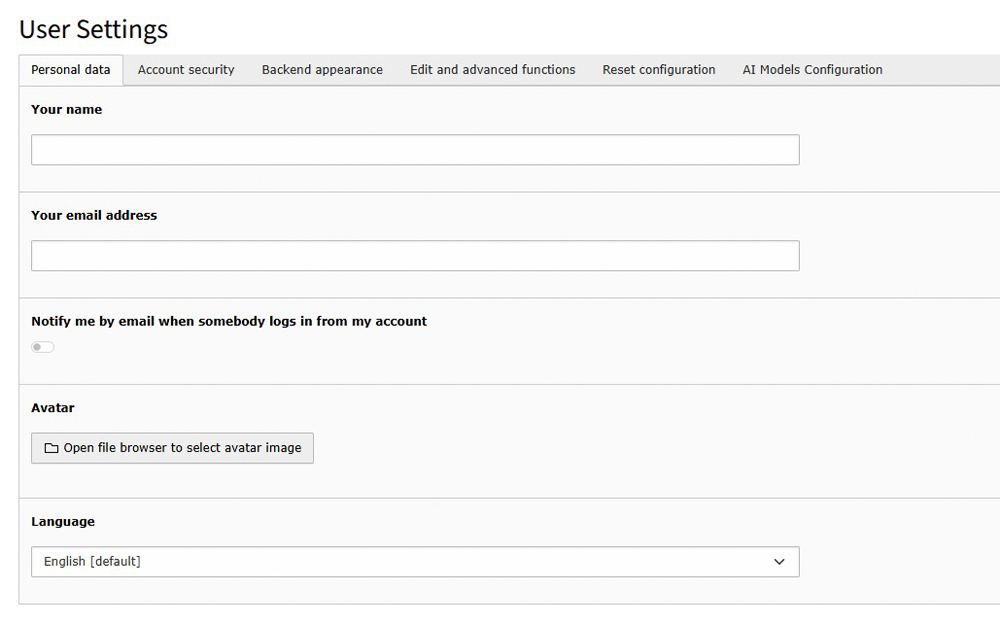
TYPO3 backend accounts are created and managed by authorised administrators. Public self-registration is not available by default because backend access can include sensitive content, files, user records, and system settings.
Account Creation for Editors
Editors cannot normally create their own backend accounts. An administrator must create or approve the account and assign permissions based on the user’s role.
This ensures that each person receives only the access needed to complete their work.
Creating Backend Users in TYPO3
In TYPO3 v14, backend accounts are managed under Administration → Users. In older versions, this section may appear under System → Backend Users.
When creating a user, the administrator usually defines:
- Username and password
- Name and email address
- Backend user group
- Page and file access
- Account activation and expiry settings
- Editor or administrator privileges
Editor accounts should be limited to content-related tasks. Administrator access should only be given to users who need advanced configuration and system-management rights.
Backend Permissions and User Groups
TYPO3 user groups control which areas and functions are available to each backend user.
Permissions can include:
- Access to selected pages
- Access to specific backend modules
- File and folder access through file mounts
- Permission to create, edit, delete, or publish content
- Access to languages, workspaces, or restricted content areas
Administrators should follow the least-privilege principle and provide only the permissions required for each role.
TYPO3 User Settings After Login
After logging in, users can adjust personal settings to improve security and customise the backend to match their working preferences.
Password Settings
Users can change their password from the user settings area. A strong, unique password should be used and stored in an approved password manager.
Multi-Factor Authentication
Where available, users can configure multi-factor authentication with an authenticator app or another supported verification method.
Recovery codes should be stored securely. If MFA is required, backend access may remain restricted until the setup is completed.
Profile and Email Information
Users may be able to update their name, email address, profile image, and other account details.
Keeping the email address correct is important because it may be used for password recovery and account notifications.
Backend Language
The backend interface can be displayed in any language available in the TYPO3 Installation.
Changing the backend language affects only the user account and does not change the language of the public website.
Backend Appearance
Depending on the TYPO3 Version and configuration, users may be able to choose a light, dark, or automatic appearance.
The automatic setting follows the display preferences of the device or operating system.
Start Module and Editing Preferences
Users can select which backend module opens after login and adjust available editing options.
These settings may include the preferred start module, page-editing behaviour, notification preferences, and personal workspace options.
Limited Access to Modules and Pages
TYPO3 only displays modules, pages, and files that the current user is allowed to access.
When an expected section is missing, the administrator may need to update the user group, page permissions, file mounts, or module access.
Resetting a Forgotten TYPO3 Password
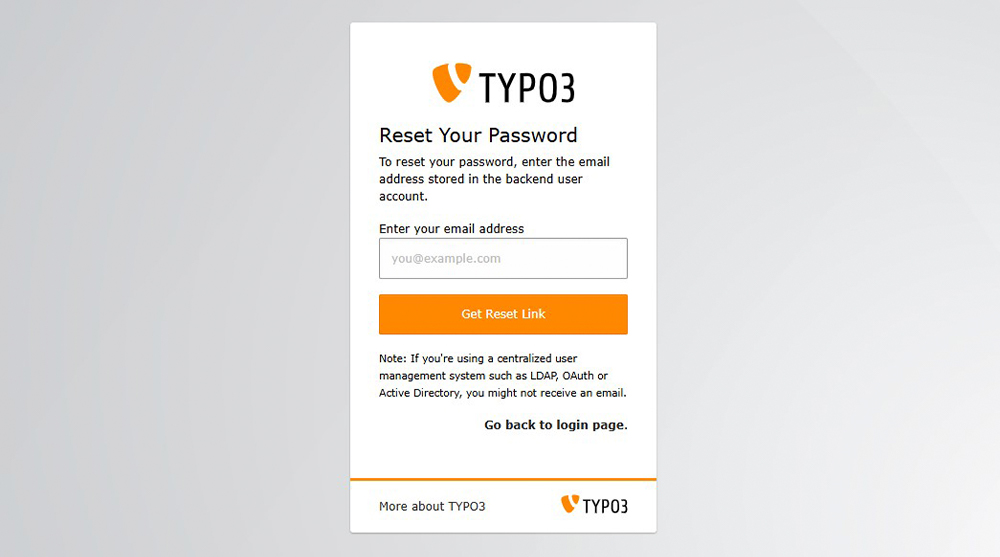
TYPO3 users can reset their password from the login page when password recovery is enabled for the website.
Password Reset from the Login Page
- Select Forgot your password?
- Enter the email address linked to the backend account.
- Open the password reset email.
- Follow the secure reset link.
- Create a new password that meets the configured security rules.
Password Reset Requirements
Password recovery works only when:
- The reset feature is enabled
- The account is active
- A valid and unique email address is saved
- TYPO3 can send outgoing emails
- The account uses standard password authentication
Missing Password Reset Link
The reset option may not appear when it has been disabled or when the website uses SSO, OAuth, LDAP, or another custom login provider.
In such cases, contact the TYPO3 administrator or the organisation managing the login system.
Missing Password Reset Email
Check the spam folder and confirm that the correct email address is connected to the account.
The email may also fail because of duplicate account addresses, mail-server issues, an expired link, or too many reset requests.
Administrator Recovery Options
Administrators can reset the password through another active administrator account. In TYPO3 v14, users are managed under Administration → Users.
Qualified administrators may also use TYPO3 command-line or recovery tools when no working administrator account is available.
TYPO3 Backend Login Problems and Fixes
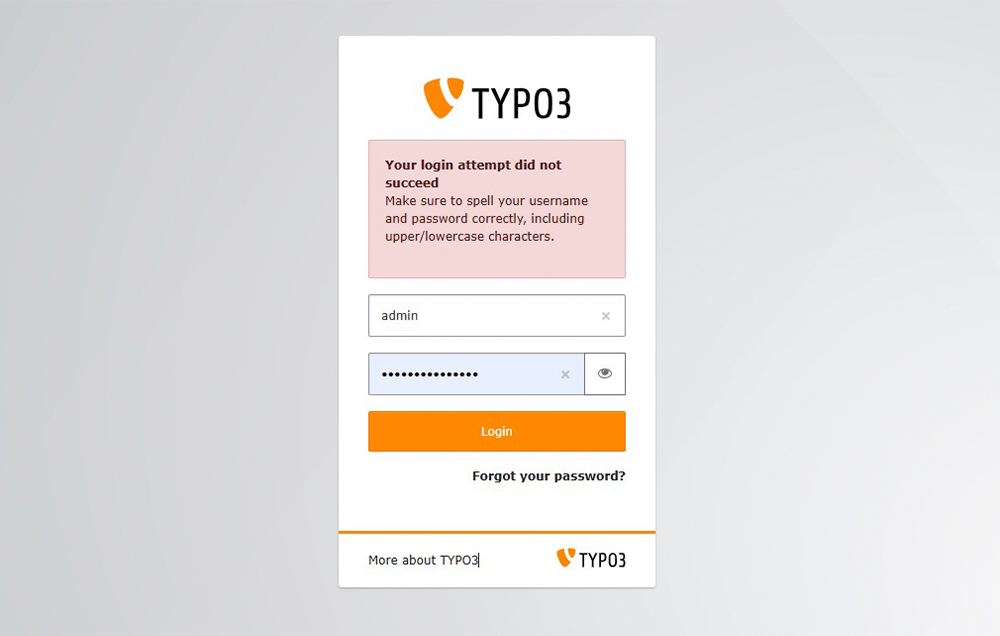
Login problems can result from incorrect credentials, browser settings, user permissions, or server configuration.
Invalid Credentials
Check the username and password for typing errors. Reset the password or ask the administrator to confirm that the account is active.
Login Page Reloads
Enable cookies and JavaScript, clear browser data, and try another browser. Persistent reloads may indicate session or cookie configuration problems.
Account Locked
Repeated failed attempts can temporarily lock an account. Wait before trying again or ask the administrator to review the login restrictions.
Backend URL Shows a 404 Error
The website may use a custom backend path or domain. Confirm the correct URL with the administrator or agency.
White Screen or Broken Login Page
A white screen or missing styling may be caused by PHP errors, damaged backend assets, file permission issues, or an incompatible extension.
Access Denied After Login
The login may be successful, but the account may not have access to the requested page, file, or backend module.
Maintenance Mode
Backend access may be temporarily restricted during updates, migrations, or technical maintenance.
Immediate Logout After Login
This is often related to cookies, HTTPS settings, session configuration, VPN changes, or an incorrect cookie domain.
Problems After an Update or Migration
Check extension compatibility, PHP errors, caches, backend assets, server routing, and the configured backend entry point.
Administrator Troubleshooting Checklist
Administrators should review:
- Account status and permissions
- Cookie and session settings
- HTTPS and cookie domain
- Web-server configuration
- File permissions and caches
- PHP and TYPO3 logs
- Backend assets
- Extension compatibility
- Custom backend URL settings
Securing Your TYPO3 Backend Login
Strong login security protects website content, files, user information, and system settings from unauthorised access.
Use a separate personal account for every backend user and avoid shared usernames such as “admin” or “editor.” Enable multi-factor authentication where possible and store strong, unique passwords in a trusted password manager. TYPO3 supports MFA providers and recovery codes for backend accounts.
Administrators should also:
- Give users only the permissions required for their work
- Limit administrator and system-maintainer accounts
- Use HTTPS for backend access
- Disable inactive or former employee accounts
- Review users, groups, and access rights regularly
Logging Out of TYPO3 Safely
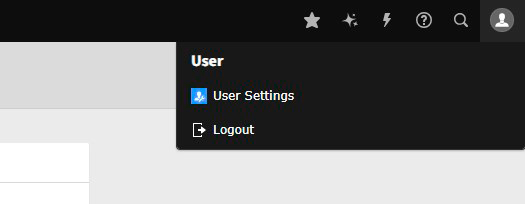
Logging out properly ends the active backend session and helps prevent other people from accessing the account.
Select the user menu in the top-right corner of the TYPO3 backend and click Logout. You will then return to the login page.
Closing the browser tab does not always end the session immediately. Always use the logout option, especially when working on a shared or public computer.
Checking Your TYPO3 Version
Knowing the installed TYPO3 version helps you follow the correct login, user-management, and troubleshooting instructions.
Authorised users can usually find the version number in the System Information area of the backend toolbar. Some editors may not see this information because access depends on their account permissions.
You can also check the version through your hosting information, project documentation, administrator, agency, or TYPO3 version-checking service.
Current TYPO3 Versions in July 2026
As of July 15, 2026, TYPO3 14.3.5 LTS is the current stable version recommended for new projects. TYPO3 13.4.33 LTS is the old stable version for existing projects. TYPO3 12, 11, and 10 are available only through Extended Long-Term Support.
Review and update this information whenever the article is revised because TYPO3 releases and support periods change over time.
Quick TYPO3 Login Troubleshooting Checklist
Use this checklist before contacting technical support:
- Confirm that you are using the correct backend URL.
- Check the username and password for typing errors.
- Make sure JavaScript and cookies are enabled.
- Clear the browser cookies for the website.
- Complete the required MFA or SSO authentication.
- Check whether the account or MFA provider is locked.
- Look for a maintenance or system-update message.
- Try another supported browser.
- Record the exact error message.
- Contact the administrator with the error details and steps already attempted.
Conclusion
The default TYPO3 backend login URL is usually https: //example.com/typo3, but TYPO3 v13 and v14 installations may use a custom path, domain, or subdomain.
If you cannot sign in, first confirm the backend URL and credentials. Then use the password reset option or follow the troubleshooting steps for account, browser, and server-related issues.
For professional support with TYPO3 login problems, user management, security, updates, or website maintenance, contact an experienced TYPO3 Agency.
Planning a new TYPO3 project? Explore our TYPO3 installation guide for the complete setup process.

Is Your TYPO3 Website Properly Secured?
Learn how to review system updates, user permissions, hosting security, and configuration settings.
FAQ's
The default TYPO3 backend URL is usually:
https: //example.com/typo3
Replace example.com with your website domain.
The website may use a custom backend path, domain, or subdomain. A 404 error may also result from server routing, maintenance, or an incomplete installation.
Public backend registration is not available by default. An authorised administrator must create the account and assign the required permissions.
Select Forgot your password? on the login page, enter the email address linked to your account, and follow the reset link sent by email.
This is often caused by blocked cookies, disabled JavaScript, incorrect HTTPS settings, session problems, or an invalid cookie-domain configuration.
TYPO3 displays only the pages, files, and modules permitted for your account. An administrator may need to update your user group, page permissions, file mounts, or module access.
Contact for Internet agency and TYPO3 projects
Sven Thelemann
Service Partner - Germany


Sven Thelemann
Client Service LeadSven Thelemann serves as the Client Service Lead at NITSAN, focusing on delivering TYPO3 solutions that meet client goals. With a strong understanding of technology and client expectations, he ensures smooth communication and project execution. Outside of work, Sven enjoys cycling and experimenting with homemade recipes.
Be the First to Comment