
VERSION CHECKER FOR
TYPO3 WEBSITES
 No installation needed
  Instant version check
  Free to use
Find out which TYPO3 version your website is running in seconds. Enter your website URL, scan the public site, and get a clear result with upgrade guidance.
CHECK YOUR TYPO3 VERSION BEFORE IT BECOMES A RISK
Knowing your TYPO3 version helps you understand whether your website is secure, supported, and ready for future updates.
Older TYPO3 versions may create security risks, extension compatibility issues, performance problems, and higher maintenance costs. A quick version check helps businesses plan upgrades before outdated software affects website stability or user experience.
This version checker for TYPO3 websites gives you a simple starting point: identify the current version, review the result, and decide whether an upgrade or technical review is needed.
WHAT IS A TYPO3 VERSION CHECKER?
A TYPO3 version checker is a tool that helps identify which TYPO3 CMS version is used on a public website.
It works by checking publicly available website signals, frontend output, accessible system indicators, and TYPO3-specific patterns. No login, backend access, or installation is required.
The result helps website owners, agencies, and technical teams understand whether the site is running on a current, supported, or outdated TYPO3 version.
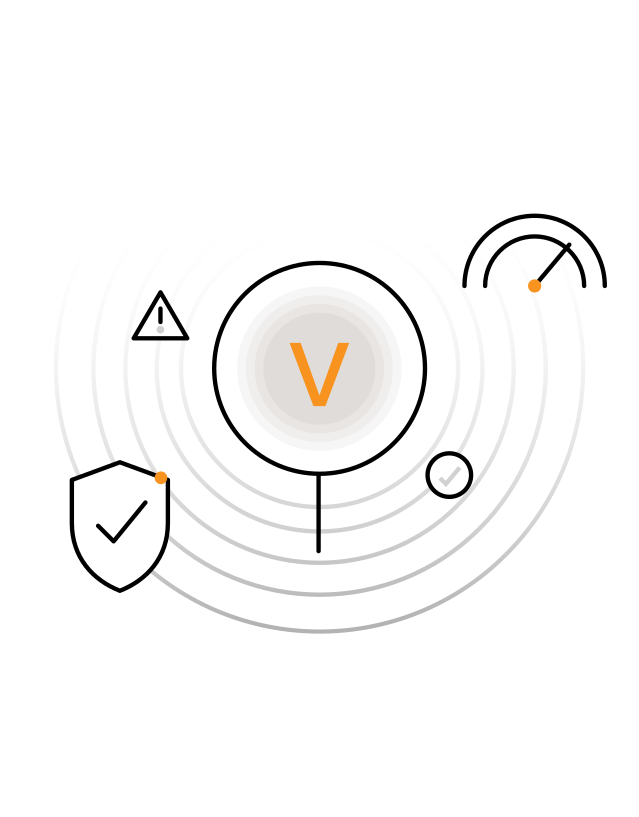
A TYPO3 version check helps you understand whether your website is secure, supported, compatible, and ready for future maintenance.
Outdated TYPO3 installations can create security risks, extension conflicts, hosting limitations, performance issues, and higher long-term maintenance costs. For business-critical websites, knowing the version early helps teams plan upgrades before problems affect stability or user experience.
- Identify outdated TYPO3 installations early
- Reduce security and maintenance risks
- Check upgrade readiness before planning work
- Improve compatibility with extensions, hosting, and PHP versions
- Support long-term website performance
- Make better decisions for client and enterprise websites
Regular version checks help teams stay informed, avoid last-minute upgrade pressure, and plan technical improvements with confidence.
HOW TYPO3 VERSION CHECKING WORKS
A simple 3-step process to check your TYPO3 website version and understand what action may be required.

TYPO3 Award Winner
NITSAN won the TYPO3 Award for our Paysafe project, which was recognized as the best financial/logistics solution.

We are TYPO3 certified.
Our developers have extensive expertise in TYPO3 development and are officially certified.




USING AN OUTDATED TYPO3 VERSION?
PLAN A SAFE UPGRADE
If your TYPO3 version is outdated, an upgrade may be the safest next step.
A TYPO3 upgrade helps improve security, compatibility, performance, backend usability, and long-term maintainability. It also reduces the risk of relying on unsupported software or outdated extensions.
NITSAN can help review your current setup, plan the upgrade path, test extensions, migrate custom code, and launch the updated website safely.

SAFE, PUBLIC, AND
PRIVACY-FRIENDLY
VERSION CHECKING
The version checker only uses publicly accessible website information. No backend login, password, or private access is required.
Your website URL is used only to perform the check and provide the result. The tool is designed to support a safe and simple version review process.
FAQS ABOUT CHECKING TYPO3 VERSIONS
A TYPO3 version checker is a tool that helps detect which TYPO3 CMS version a public website is using.
Enter your website URL into the checker. The tool scans public website signals and shows the detected TYPO3 version.
Yes, the version checker is free to use and does not require installation.
You should check your TYPO3 version to understand security status, support level, upgrade need, and compatibility risks.
If your version is outdated, you should plan an upgrade or technical review to reduce security, compatibility, and maintenance risks.
The tool checks public website signals. If version information is hidden or unavailable, a manual technical review may be needed.
No. The version checker does not require backend login details or administrator access.
Yes, the tool can check publicly accessible TYPO3 websites, including many Composer-based installations, where version signals are available.
Yes, agencies can use it for public client websites during audits, maintenance planning, or upgrade assessments.
The tool can check publicly accessible websites, but results should be used for technical benchmarking and responsible analysis only.