---
title: "AI and Accessibility: Making TYPO3 Websites Barrier-Free for All"
url: "https://nitsantech.de/en/blog/typo3-accessibility-ai"
description: "Discover how AI makes TYPO3 websites barrier-free, improving accessibility for all. Learn tools, benefits, and real-life examples. Read now!"
image: "https://nitsantech.de/fileadmin/_processed_/d/9/csm_AI-and-Accessibility_9bacd815b5.jpg"
date: 2025-02-07
modified: 2025-11-07
lastUpdated: 2026-02-25
categories:
- Barrierefreiheit
---
# AI and Accessibility: Making TYPO3 Websites Barrier-Free for All
AI and Accessibility: Making TYPO3 Websites Barrier-Free for Everyone
=====================================================================
07 Feb 2025
[](https://nitsantech.de/en/blog/author/stefan-reinhardt)
[Stefan Reinhardt](https://nitsantech.de/en/blog/author/stefan-reinhardt)
[ Accessibility ](https://nitsantech.de/en/categories/barrierefreiheit)
Artificial Intelligence is a popular topic, and one of its biggest benefits is making life easier, especially for people with disabilities. AI helps individuals gain more independence and stay connected in daily life by improving digital accessibility.
Table of content
The internet is a big part of our daily lives. But not everyone can use websites easily. Some people have trouble seeing, hearing, or understanding content online. This is where **AI (Artificial Intelligence)** helps. It makes websites easier to use for everyone, including people with disabilities. AI can read text aloud, describe images, and simplify content, making the internet more accessible for all.
*This article will show you how AI improves web accessibility, with examples!*
Around 1.3 billion people, or 16% of the world's population, live with disabilities that affect how they move, see, hear, or interact with the world. This means that nearly one in six people face challenges in their daily lives due to a disability, according to the [**World Health Organization**](https://www.who.int/news-room/fact-sheets/detail/disability-and-health#:~:text=Key%20facts,earlier%20than%20those%20without%20disabilities.).
In Germany, about [**10.4 million people**](https://aktion-mensch.stylelabs.cloud/api/public/content/studie-barrieren-im-alltag.pdf?v=28efd1ef) (12.6% of the population) live with a disability, and AI can play a big role in supporting them. The EU's Charter of Fundamental Rights states that accessibility is a basic right for people with disabilities [(Articles 21 and 26](https://aktion-mensch.stylelabs.cloud/api/public/content/studie-barrieren-im-alltag.pdf?v=28efd1ef)). Accessibility matters because it ensures equal access, improves user experience, expands audience reach, boosts SEO, and ensures legal compliance.
### Scan TYPO3 Website for Accessibility in Seconds

- **Artificial Intelligence (AI)** refers to computers, software, and programs that can perform tasks typically carried out by humans, such as language understanding, image recognition, and decision-making.
- **Accessibility website** means making sure everyone, including people with disabilities, can use websites, apps, and digital tools without barriers. It helps people with vision, hearing, movement, or learning difficulties to access and use the internet easily.
When AI and accessibility work together, the internet becomes more accessible and barrier free. AI can help people see, hear, and understand digital content better.For example:
- **A blind person** can hear a description of an image.
- **A deaf person** can read automatically generated subtitles in a video.
- **A person with dyslexia** can have AI read text aloud for them.
- **A paralyzed person** can navigate a website using voice commands.
AI is already used in many creative ways to make websites and digital content more accessible. Here are some real life examples:
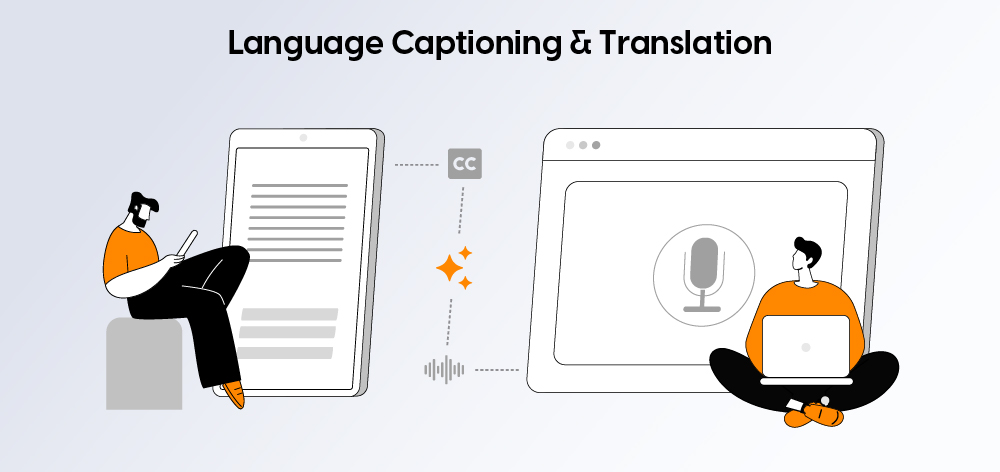
#### **1. language captioning & translation**
AI-based speech recognition tools generate captions for videos and transcriptions for audio, helping users with hearing impairments. AI translation tools can also convert written text into sign languages for better communication.
- **Example**: YouTube & [Zoom](https://www.spf.io/2020/03/19/caption-and-translate-your-zoom-video-calls-webinars-and-remote-conferences-with-spf-io/) provide real-time captions for videos and live calls, making them accessible to deaf and hard-of-hearing users.
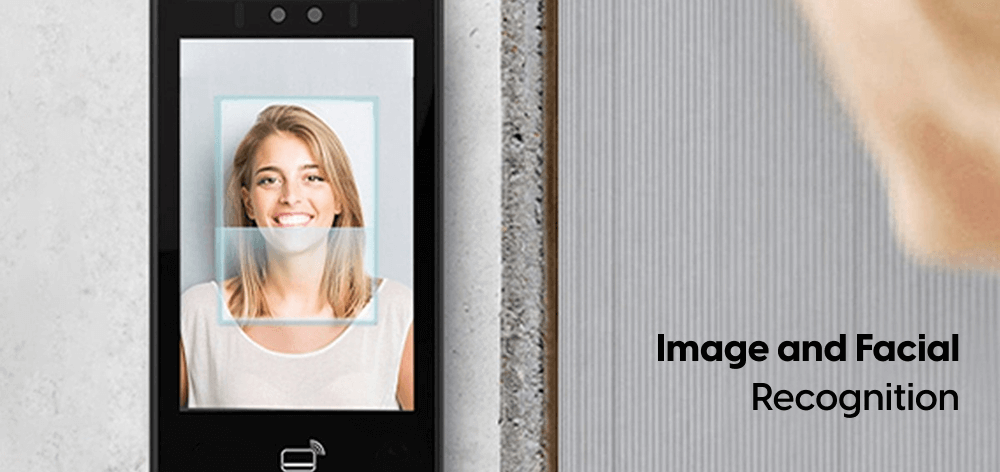
#### 2. image & facial recognition
AI can describe images, objects, and text, allowing visually impaired users to understand visual content. Facial recognition can analyze emotions, expressions, and identities, offering real-time audio descriptions.
- **Example**: Facebook & Twitter use AI to create automatic [alt text for images](https://www.accessible-social.com/images-and-visuals/platform-image-accessibility), helping blind users understand photos on social media.
#### 3. user navigation
AI-powered navigation tools assist users with mobility impairments by guiding them through digital and physical spaces. These tools suggest accessible routes, detect ramps and elevators, and offer real-time guidance.
- **Example**: [Google Maps](https://blog.google/products/maps/introducing-wheelchair-accessible-routes-transit-navigation/) provides wheelchair-accessible routes, helping people with mobility challenges navigate cities efficiently.
#### 4. summarizing information
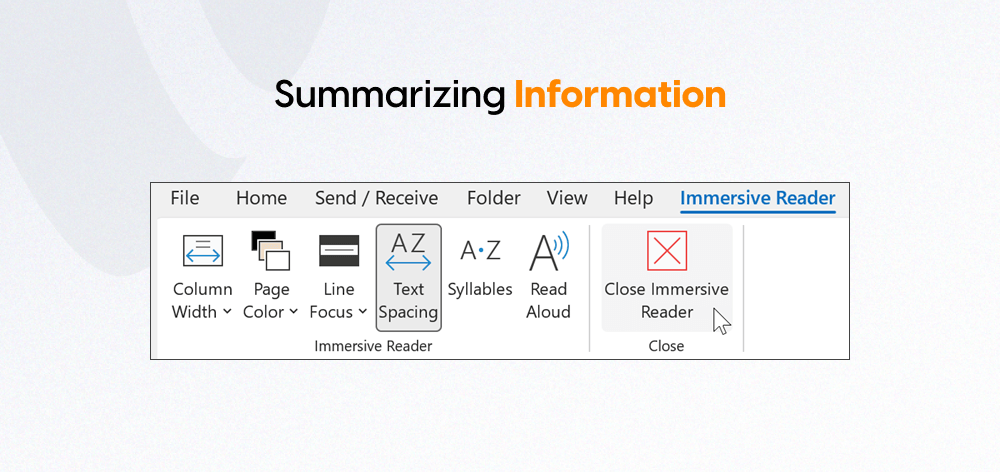
AI helps users with cognitive disabilities or reading difficulties by simplifying complex information into short, clear summaries.
- **Example**: Microsoft's Immersive Reader converts text into easy-to-read formats and adjusts font size, spacing, and background colors for users with dyslexia.
#### 5 AI chatbots for accessibility
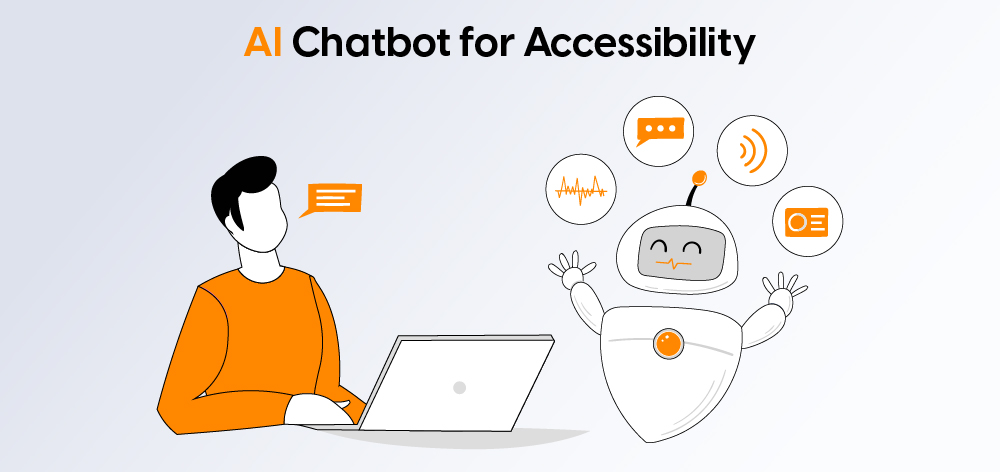
AI chatbots offer real-time assistance, answering user queries, guiding them through websites, and providing customized support for different TYPO3 accessibility needs.
- **Example**: [Amazon's Alexa](https://www.aboutamazon.com/news/devices/how-alexa-helps-customers-with-disabilities-every-day) & [Google Assistant](https://blog.google/outreach-initiatives/accessibility/voice-access-updates/) allow users with mobility impairments to browse the web, control devices, and send messages using voice commands.
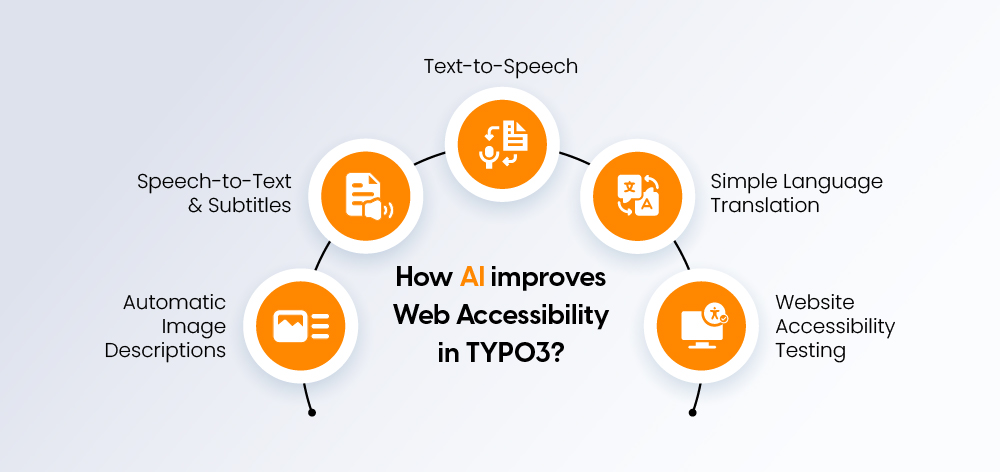
AI-powered tools in [**TYPO3 websites**](https://nitsantech.de/en/blog/typo3-website) can automatically fix accessibility issues on websites. Here's how AI helps:
- **Automatic Image Descriptions** - AI in TYPO3 can generate ALT text for images so [**screen readers**](https://nitsantech.de/en/accessibility-glossary/screen-readers) can describe them to visually impaired users.
- **Speech-to-Text & Subtitles** - AI generates subtitles for videos, making content accessible for deaf or hard-of-hearing users.
- **Text-to-Speech** - AI reads aloud website content for people who have difficulty reading.
- **Simple Language Translation** - AI can rewrite complex text into easy-to-read versions for better understanding.
- **Website Accessibility Testing** - AI tools scan websites and suggest fixes for better user experience.
Using AI in [**TYPO3 CMS**](https://nitsantech.de/en/blog/typo3-perfect-cms-for-everyone) can improve[ **TYPO3 Accessibility**](https://nitsantech.de/en/blog/typo3-accessibility), content quality, and user experience. Here are some AI-powered tools that work well with TYPO3 websites:
| ###### **Extension** | ###### **Functionality** | ###### **Features** |
|---|---|---|
| [Silktide](https://silktide.com/) | Monitors website accessibility, SEO, and performance | SEO Best Practices |
| [W3C Web Accessibility](https://www.w3.org/WAI/test-evaluate/tools/list/) | Provides a list of tools to evaluate web accessibility | Multiple testing tools |
| [Accessibility Checker](https://www.accessibilitychecker.org/audit/?website=t3planet.com&flag=us) | Conducts audits to ensure websites meet accessibility standards | Compliance reports and audits |
| [T3AI TYPO3 AI Extension](https://t3planet.de/en/t3ai-typo3-extension) | Generates SEO-friendly content and keyword suggestions within TYPO3 | AI content, keyword suggestions |
| [TYPO3 Chatbot Extensions](https://t3planet.de/en/typo3-chat-extension) | Assists users with navigation, FAQs, and accessibility support | User Experience & Accessibility |
By integrating these AI tools, TYPO3 CMS users can enhance website accessibility, automate content creation, improve SEO, and provide a more barrier free and user-friendly experience.
Web accessibility is not just a good practice-it is a must. Using AI for web accessibility has many advantages:
#### **1. Faster implementation**
AI can quickly detect, analyze, and fix accessibility issues, reducing manual effort.
#### **2. Time-effective**
Automating accessibility improvements saves development time and costs, making it a smart long-term investment.
#### **3. Better user experience**
A more accessible website improves usability, navigation, and ensures a smoother experience, leading to happier users.
#### **4. More visitors**
An accessible website ensures that everyone, including people with disabilities, can engage with your content.
#### **5. Better SEO**
Search engines prioritize accessible websites with alt text, clean navigation, and well-structured content, increasing visibility and traffic that improves [TYPO3 SEO](https://nitsantech.de/en/blog/typo3-seo).
#### **6. Legal requirements**
Many governments have laws like [WCAG](https://www.wcag.com/) and [EAA](https://eur-lex.europa.eu/legal-content/EN/TXT/?uri=CELEX%3A32019L0882) that require businesses to make websites accessible.
#### **7 Social Responsibility**
Every user deserves equal access to online information. Equal access to online information is a basic human right, promoting inclusivity and digital equality for everyone.
#### **8 Business Growth**
Companies that prioritize accessibility build a positive brand image, attract more customers, and gain more trust.
While AI has the potential to improve accessibility, it also comes with challenges like misinformation, speech errors, and many others that can create new barriers for people with disabilities. Some of them can be found below:
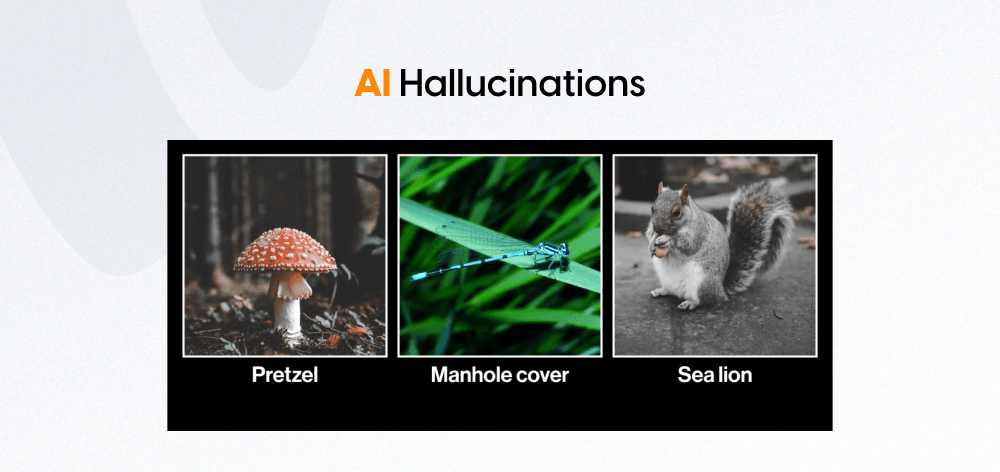
#### 1. AI Hallucinations
AI can generate false information, like misidentifying images or altering important data. This is especially risky for blind users who rely on accurate AI descriptions.
#### 2. Faulty voice output
Modern AI-generated speech can mispronounce words, skip numbers, or distort messages, leading to serious misunderstandings for users who depend on clear audio.
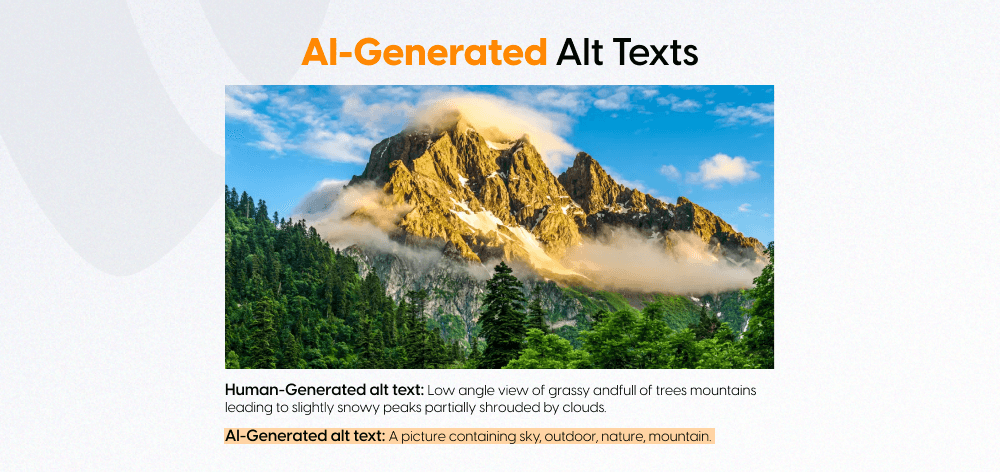
#### 3 AI-Generated Alt Texts
AI can create basic image descriptions, but it often lacks context and missing key details. While useful as a fallback, it shouldn't replace carefully written alt texts.
#### 4. Bias in AI training data
AI learns from existing data, which can contain biases. This often leads to misrepresentation or disadvantages for minorities, including people with disabilities.
#### 5 Issues with Accessibility Overlays
One-click accessibility overlays often fail. They may adjust contrast or font sizes but don't fix structural issues like missing alt text or form labels, which are essential for accessibility.
### **Test the accessibility of your TYPO3 website for free!**
AI is shaping the future of web accessibility, making websites smarter and more accessible. With AI-powered tools, With the [**TYPO3 Accessibility Checker**](https://nitsantech.de/en/blog/typo3-accessibility-checker), site owners can automate accessibility improvements, reduce manual work, and provide a better user experience for everyone.
At **NITSAN** - [**TYPO3 agency**](https://nitsantech.de/en/typo3-agency), we specialize in AI solutions for TYPO3, helping businesses make their websites fully accessible and compliant.
Get in touch with us today for expert TYPO3 AI integration, and let's work together to make your site better for everyone!

#### Contact for SMEs, government organizations and BITV 2.0
#### Stefan Reinhardt
Service Partner - Germany
[ stefan.reinhardt@nitsantech.de ](mailto:stefan.reinhardt@nitsantech.de) [ +49 6204 6011377 ](tel:4962046011377)

### Stefan Reinhardt
Service Partner
- [](https://www.linkedin.com/in/markt-machen-system/ "linkedin")
Stefan solves tech problems for businesses. He focuses on upgrading outdated systems and moving companies to the cloud. At NITSAN, he collaborates with clients to create solutions that save both time and money. Outside of work, he enjoys brewing coffee and hiking with his dog.
Comments and Responses
----------------------
Thank you for your comment. Your Comment Added Successfully.
Thank you for your comment. Your Comment Will Be Visible After Approval.
Oops! Something went wrong, please try again later.
##### **Be the First to Comment**
### Related Blogs
[ 
#### Accessibility websites with TYPO3 | WCAG, BFSG & BITV 2.0
](https://nitsantech.de/en/blog/typo3-accessibility)
[ 
#### BITV 2.0 and WCAG: Germany’s Web Accessibility Law Explained
](https://nitsantech.de/en/blog/bitv-and-wcag)